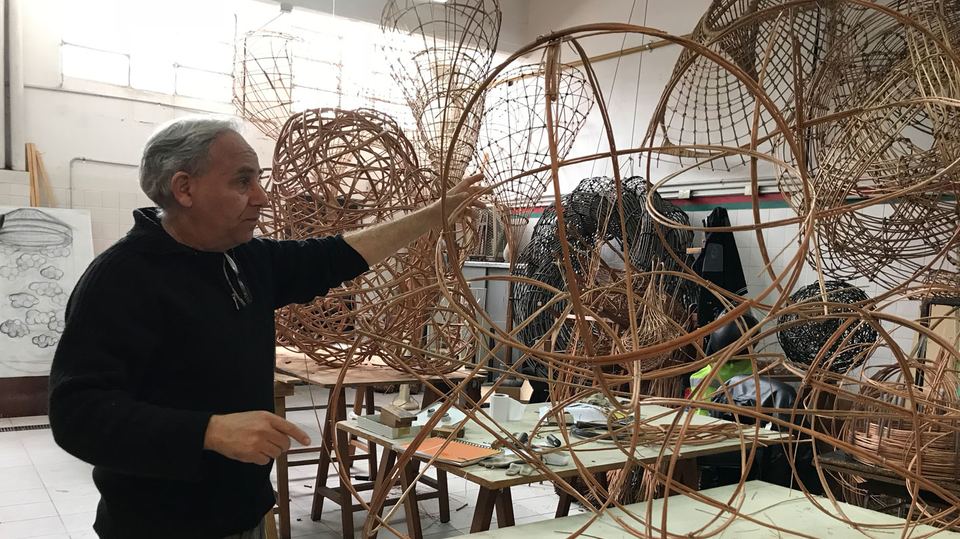
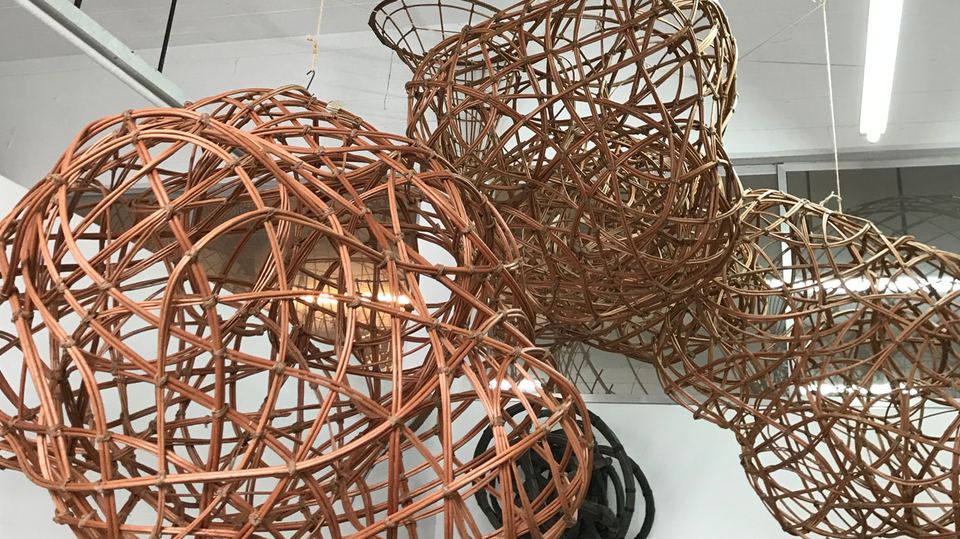
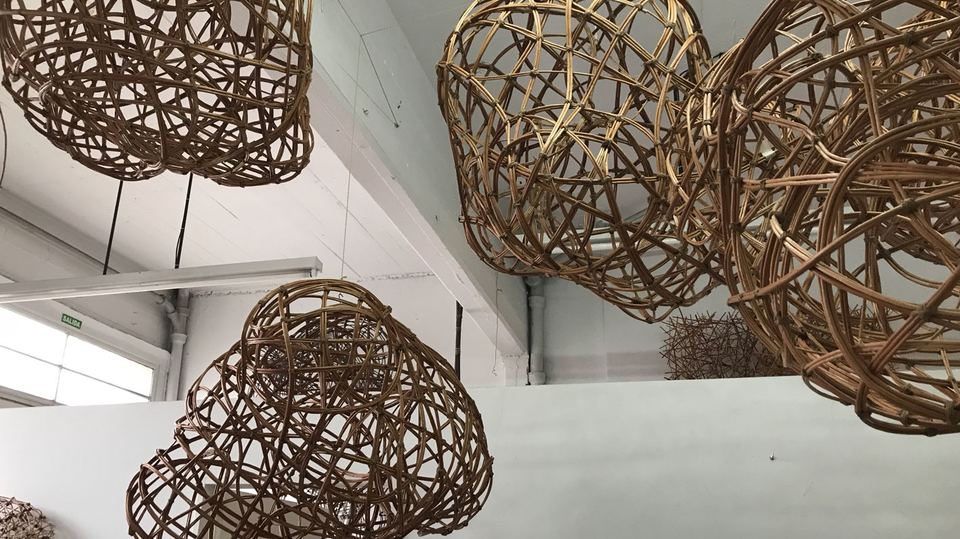
An installation conceived for the Bellatrix Silo: wicker rods that draw suspended clouds in space, in dialogue with the metal sheeting and the round architecture of the silo.
Edgardo Madanes
I was born in 1961 in the city of Buenos Aires, Argentina. I share my dedication to art between production, research and teaching. Since I was very young I was in contact with an area (very close to the city) made up of rivers and small islands. I spent my weekends enjoying that place and connecting with nature.
 1 / 6
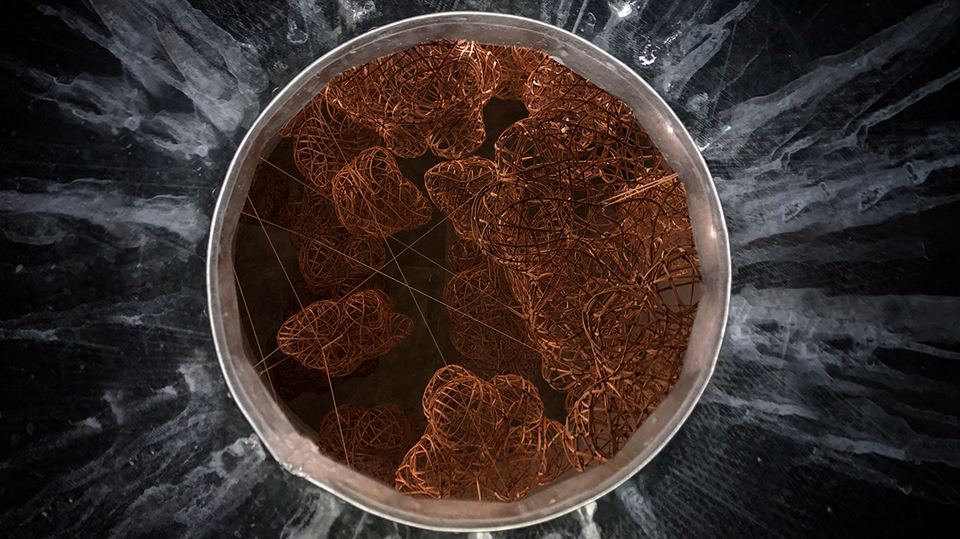
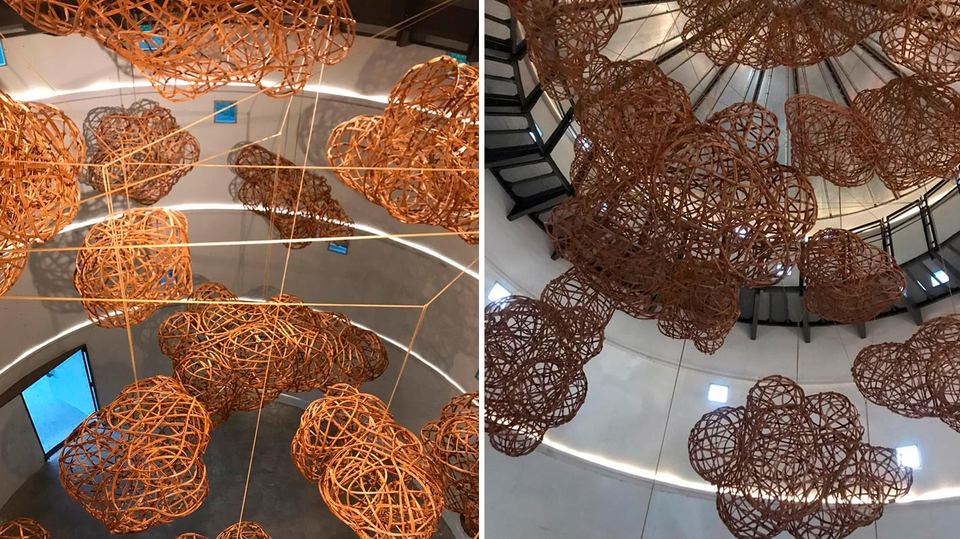
Project for the CloudsEdgardo Madanes · Wicker · Sculptural installation
An installation conceived for the Bellatrix Silo: wicker rods that draw suspended clouds in space, in dialogue with the metal sheeting and the round architecture of the silo.
Works at Bellatrix
“Proyecto para las nubes” (Project for the Clouds) is a magical work. The sculptures seem to float inside the Silo; the color of the wicker contrasts with the sheet metal, and a spontaneous dialogue arises between art and architecture. The clouds are drawings in space, almost stage-set elements. We consider Madanes’s work very important because it reflects the premise of Bellatrix: the union of art and nature. The wicker sculptures let us appreciate the nature around us in a different way. Looking at the clouds together with his wonderful poem reveals other ways of seeing the world and of appreciating his sensibility.
In the artist’s words
“Proyecto para las nubes” is a sculptural installation conceived for Bellatrix. It arises from the containing space (the Silo) and from the geographical context (the countryside). The Silo is decisive in my project: it makes me deeply curious to imagine its interior and what it stores.
It is an architectural space very different from the ones we usually enter. What makes it unique is its storage function, its circular shape and the vertical strength with which it stands out in the landscape.
I want to propose a game based on a fantasy, creating an interior with wicker elements that suggest a three-dimensional drawing of clouds suspended inside the silo. I invite visitors to enter a place that is usually perceived only from the outside.
I offer them the chance to become accomplices in the construction of a project, a game, a fantasy. The installation is a project, a model that bears witness to a wish.
It is a three-dimensional diagram, made of wicker, of an action that is supposedly yet to happen.
Biography
I was born in 1961 in the city of Buenos Aires, Argentina.
I divide my dedication to art between production, research and teaching.
From a very young age I was in contact with an area (very close to the city) made up of rivers and small islands. I spent my weekends enjoying that place and connecting with nature.
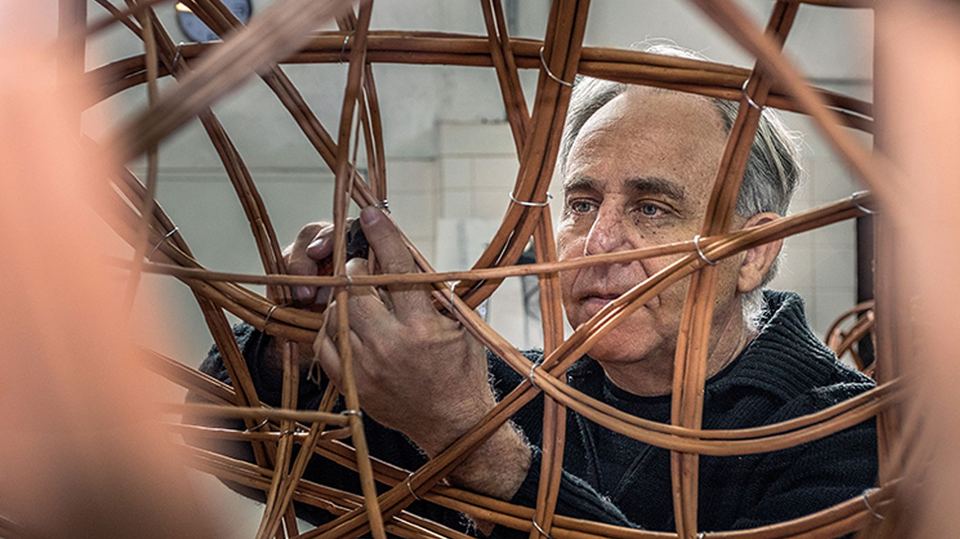
I watched the islanders and the resources they use to live in a landscape that changes constantly with the rising of the rivers. In that setting I found wicker. The day I first came into contact with its rods I felt the seductive power of the material, and since then I have been making work with it.
By handling wicker and engaging in a dialogue with it, I discovered its flexibility and the limits of its strength. The rods joined to one another create webs of varied shapes, with open and closed spaces. They form volumes capable of conveying places and capturing sites.
Each wicker rod will demand of the other subordination to the network, to society, in order to draw space. They are able to bend and adapt to the curve the form requires, but many break and are discarded without becoming part of the weave.
Some are straight. Others have deviations in their path that reveal some suffering in their growth. They may fork or have their tips cut off.
I think of the wicker rod as analogous to the individual living in society. Each rod has its own identity, even though at a quick glance they may look the same. They bear the traces of their life on their own bodies.
Awards and honors
- Konex Award (2012)
- Grand Prize of Honor, National Salon (2011)
- First Prize, Salón Manuel Belgrano (2006)