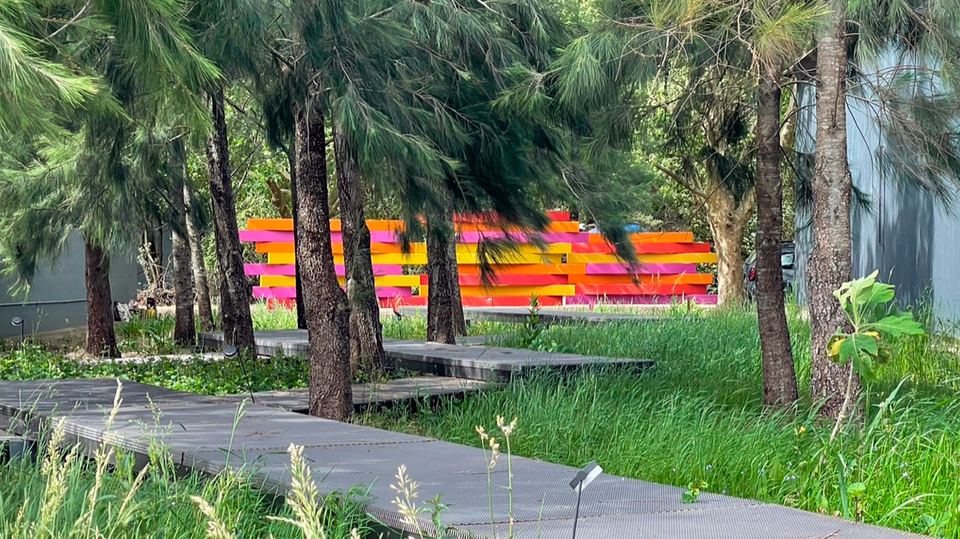
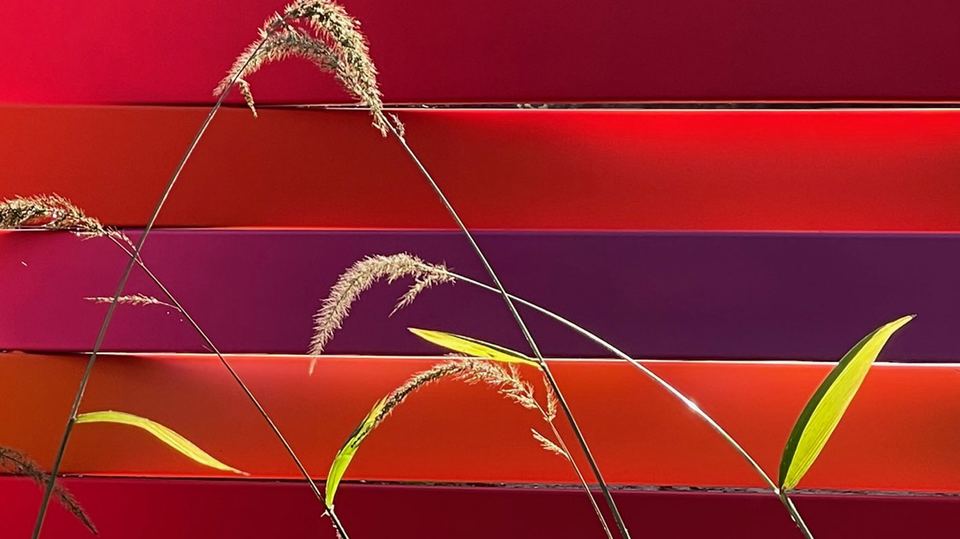
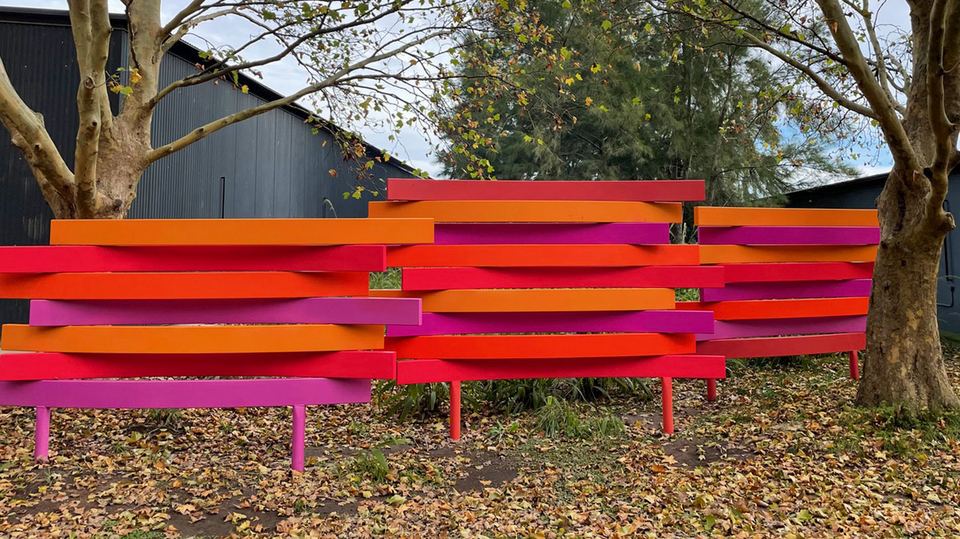
Curved prismatic volumes painted in the palette of the Pampas sunset: yellows, oranges, reds, pinks and magentas.
Carola Zech
These projects are site-specific installations; they propose an encounter through a dislocation, a displacement from the realm of nature to the field of art.
 1 / 8
LumenCarola Zech · Iron painted with automotive paint · Site-specific installation
Curved prismatic volumes painted in the palette of the Pampas sunset: yellows, oranges, reds, pinks and magentas.
Solar KaleidoscopeCarola Zech · 2026 · Mirrored hexagonal room with colored acrylic walls · Immersive installation
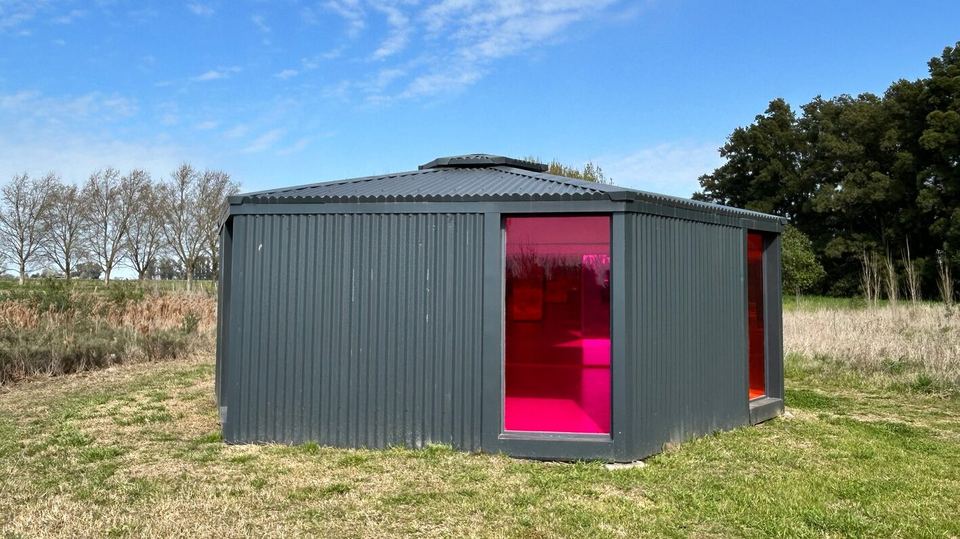
A mechanism for creating images, a sensitive space to gaze at the sun’s activity and the passage of time, functioning as a sundial kaleidoscope: light enters through colored acrylic walls and the mirrors multiply the landscape.
Works at Bellatrix
A mechanism for creating images, a sensitive space to gaze at the sun’s activity and the passage of time, functioning as a sundial kaleidoscope: light enters through colored acrylic walls and the mirrors multiply the landscape.
Lumen
The beauty of a sunset is conducive to gathering and meditation, being expressed every day in a unique, unrepeatable and ephemeral way. Humanity shares its light, it is the energy of life. It could be a manifestation of the pure present, a metaphor for the impermanence that pervades all the phenomena of life. The chromatism of the work is the concept that reverberates and updates the colors of the Pampas sunset.
The idea of bringing the sun closer to the earth, the luminous flow of a sunset —and into the field of art— takes shape through color. The aim is to recall it through color: a palette that alludes to the sunset, yellows, oranges, reds, pinks, magentas. The installation is made up of curved prismatic iron volumes, polychromed with automotive paint.
Solar Kaleidoscope
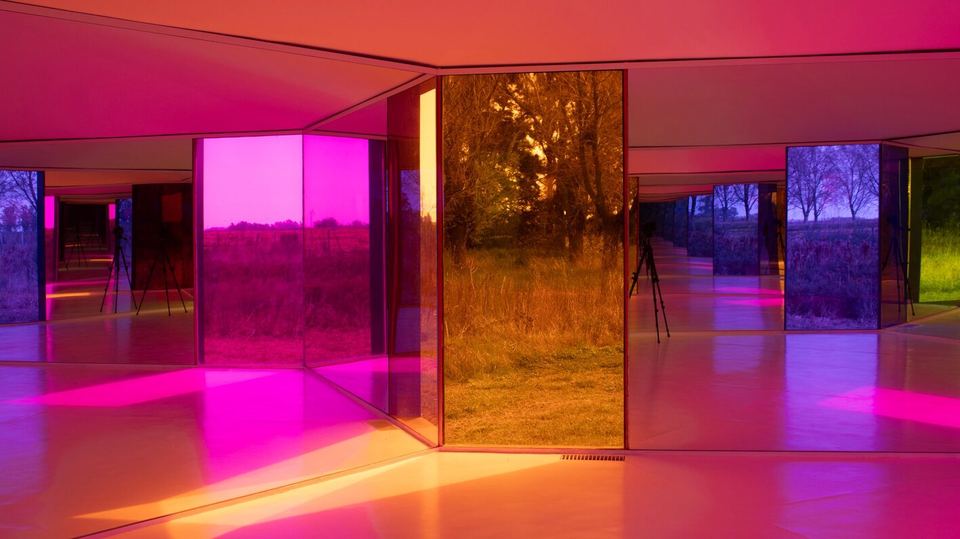
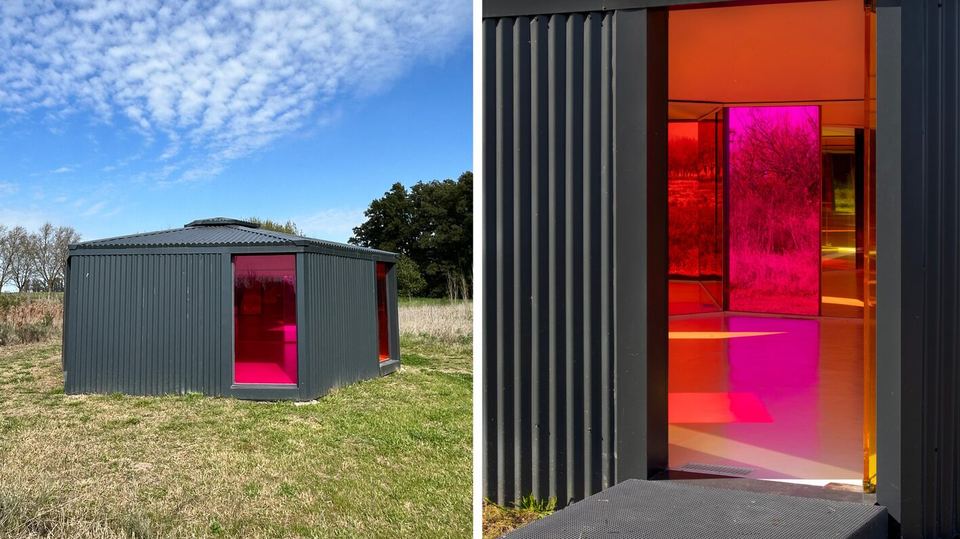
This is a mirrored hexagonal room that proposes an immersive experience. It is a mechanism for creating images—a sensitive space to gaze at the sun’s activity and the passage of time, functioning as a sundial kaleidoscope.
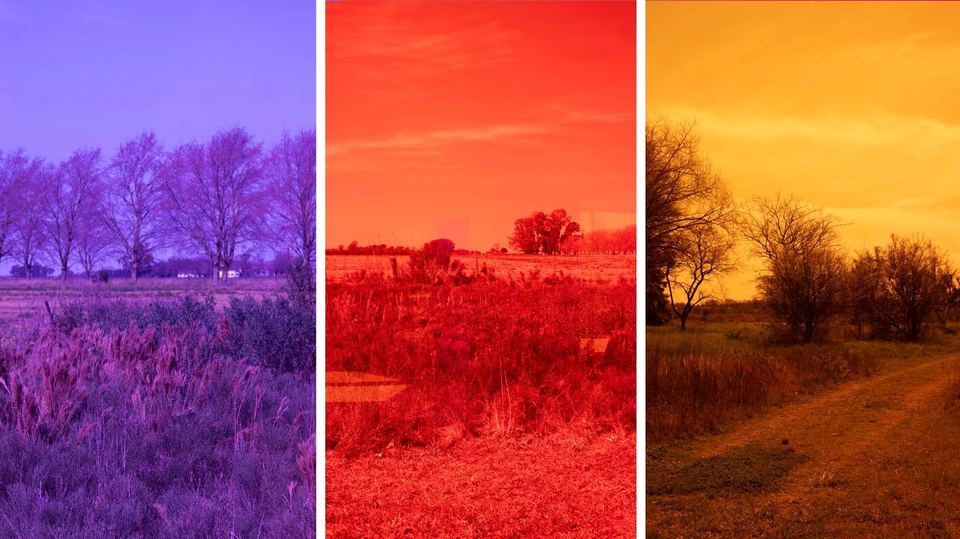
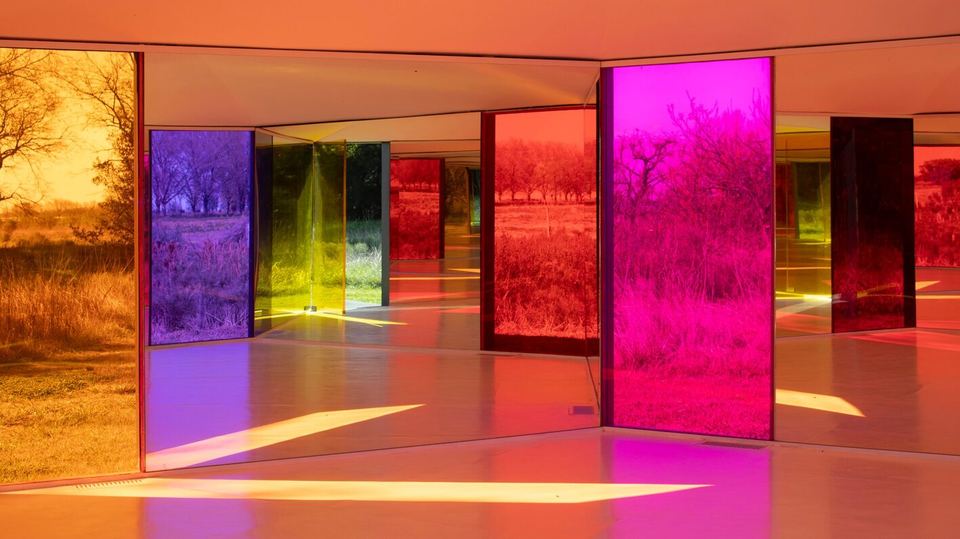
Through transparent acrylic walls of different colors, exterior light enters the room, reflects off the mirrors, and projects the landscape onto the floor, multiplying the images. This dynamic interaction marks the passage of time and the changes in light and brightness of the surrounding landscapes, providing diverse perspectives as you walk around.
Once inside, two physical processes intertwine: reflection and projection. These processes symbolize different ideas.
Reflection
From the inside: reflection represents the multiplicity of different viewpoints of the landscape, as mirrors reflect diverse and unique parts of it. The reflected image varies with the position and angle of the observer.
This phenomenon can be understood as a metaphor for the different perspectives that we, as individuals, may hold regarding the same reality: in this case, the Pampean landscape of Bellatrix. By considering multiple points of view, our understanding of nature expands, just like our connection to it.
Projection
The projection of light symbolizes transformation, change, and the passage of time.
Inside: light transforms as it passes through the windows, projecting into the space and tinting the surfaces with different colors. The experience depends on the time of day and the intensity of the sunlight. On sunny days, the projection is intense and well-defined; on cloudy days, it is soft and diffused. By spending time within the space, the public can perceive the passage of time through the fading and shifting of light.
From the inside out: the experience from the inside offers the possibility of casting the gaze outward (as if the gaze itself were light) through chromatic filters that represent the colors of sunset. It is an attempt to preserve, through an artistic experience, something that is, in reality, ephemeral.
From the outside in: observing from the outside creates a superimposition of images originating from both the interior and the exterior, resulting in oneiric images.
Biography
Carola Zech lives and works in Buenos Aires. She has a degree in Visual Arts from the Universidad Nacional de las Artes. Her work takes the form of installations and sculptural projects. She took part in Bienalsur 2021 at JAX District, Riyadh, Saudi Arabia, and at the German Embassy in Buenos Aires, and in Bienalsur 2019 with an installation in public space in the City of Buenos Aires.
Her solo and group exhibitions include: Lumen, materiales y procesos, Museo de Arte Contemporáneo de La Boca (2022, solo); El camino de las formas, Centro Cultural Recoleta (2020); Visual Arts Competition, Fondo Nacional de las Artes (2020 and 2017); Ana Carola Kveta Sarah, Galería Jorge Mara La Ruche (2019); ARCO Madrid, Galería Jorge Mara La Ruche (2018/19); #Links, Sívori Collection, Museo Sívori (2018); arteBA, Galería Jorge Mara La Ruche (2018/19/20); Obras 2007/2017, Galería Jorge Mara La Ruche (2017, solo); Flotar, volar, caer, Kloster Bad Schussenried, Germany (2017); Pensar en abstracto, Museo de Arte Contemporáneo de Buenos Aires (2017); Como el viento, Museo Nacional de Bellas Artes, Neuquén (2016, solo); Espacio es espacios, Proyecto Vidriera, Espacio de Arte Fundación OSDE (2015); Instabile, Galería Vasari (2014, solo); Magnético, Centro Cultural Recoleta (2013, solo); Geometría: desvíos y desmesuras, Fundación OSDE (2013); LA to LA. Selection of works from Sayago and Pardon Latin American Art Collection, California, USA (2012).
In 2022 she was appointed a full member of the Academia Nacional de Bellas Artes.
Awards and honors
- Konex Award, Fundación Konex (2022)
- Grand Prize of Honor, 102nd National Salon of Visual Arts, Sculpture, Argentine Ministry of Culture (2013)
- First Prize in Sculpture, Salón Manuel Belgrano, City of Buenos Aires (2008)