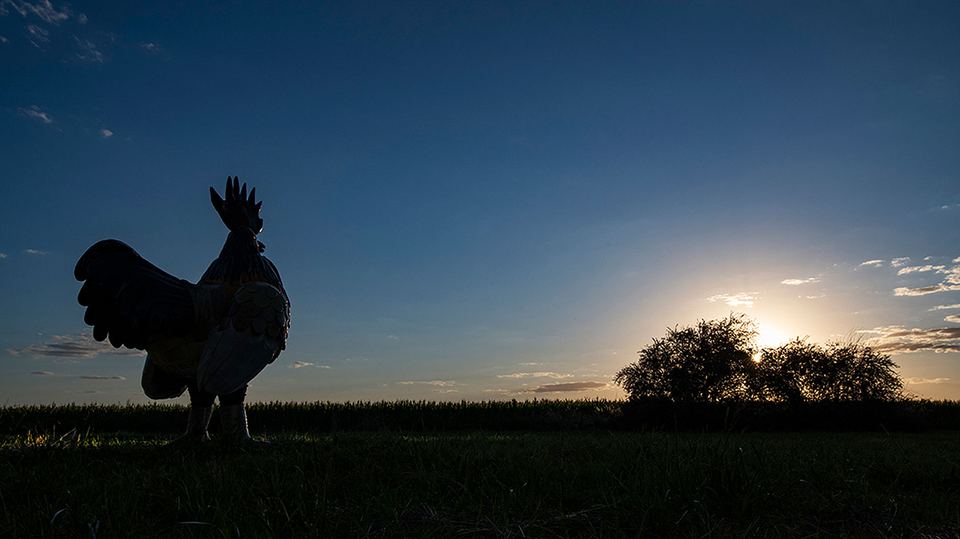
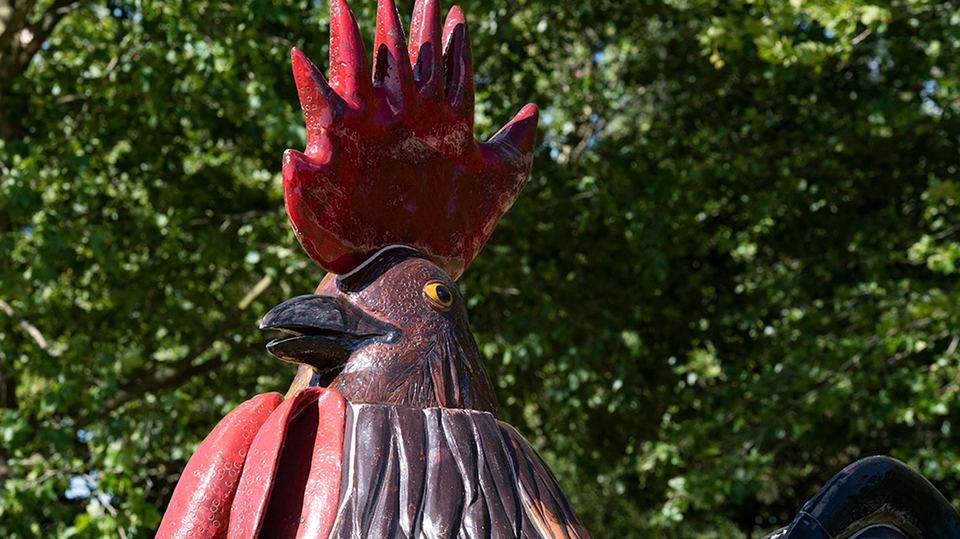
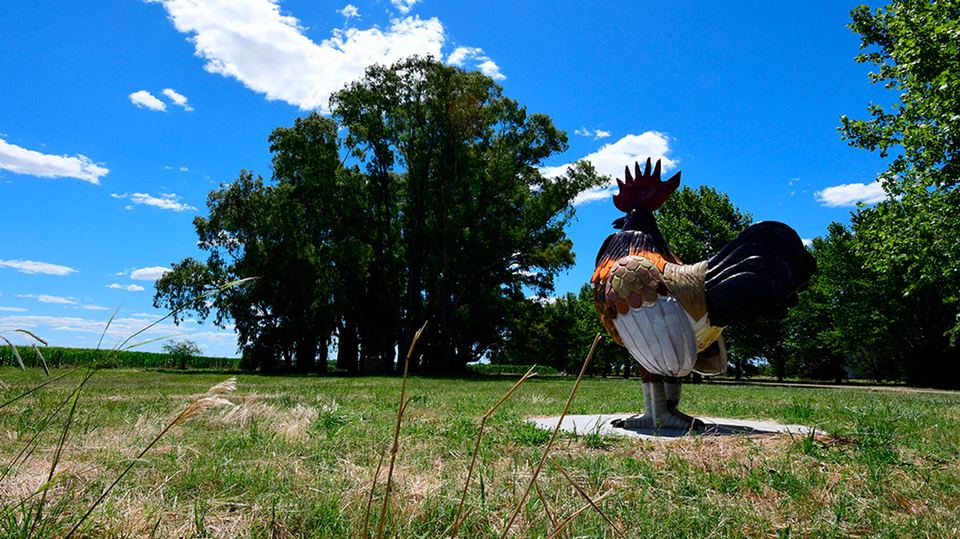
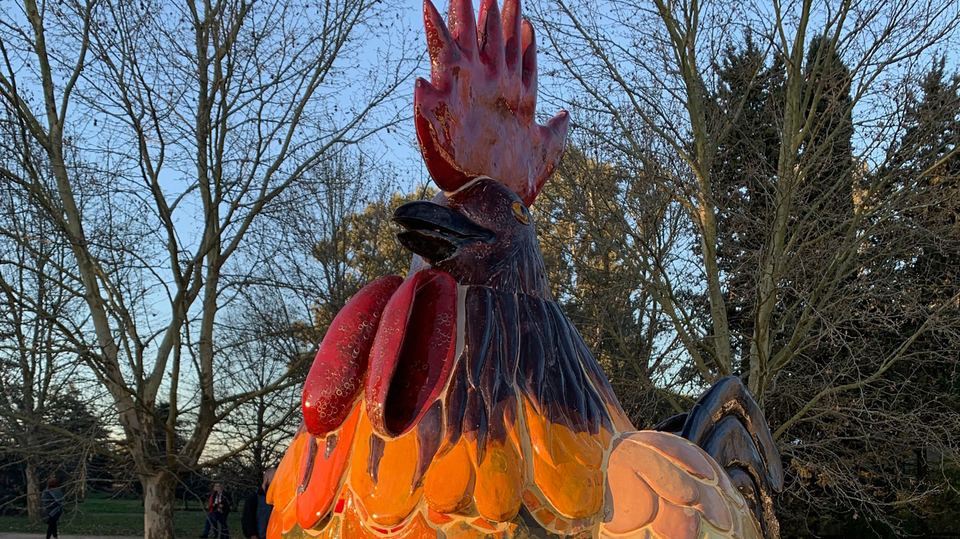
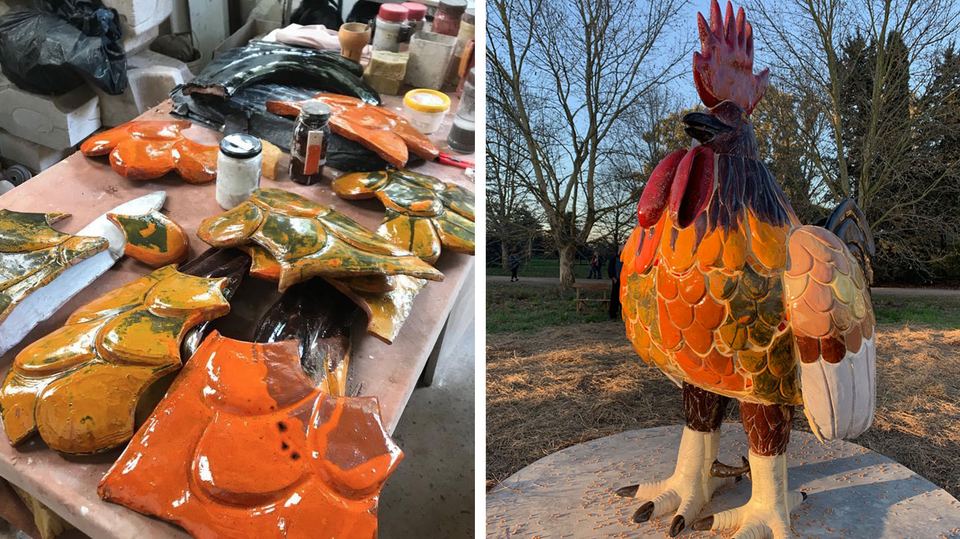
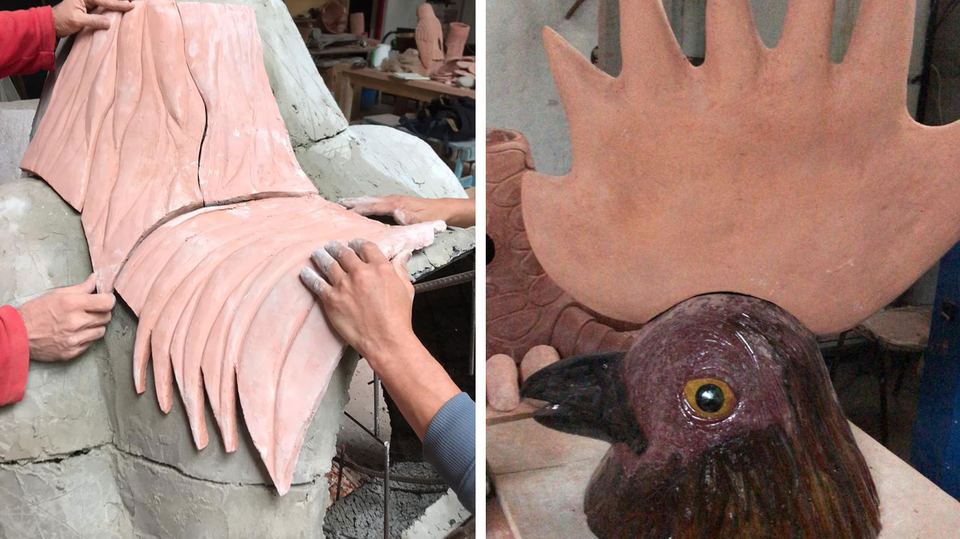
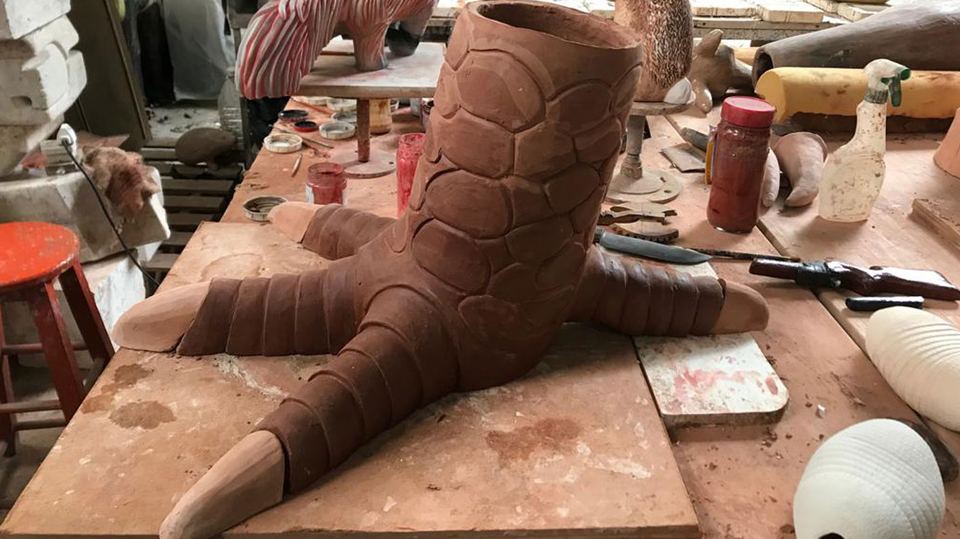
The sentinel of Bellatrix. Hand-modeled and covered in layers of glaze, it holds all of Desirée’s creative and vital energy and her commitment to native wildlife.
Desirée De Ridder
My work is about our fauna in danger of extinction, the use of agrochemicals, the felling of native forests and animal mistreatment. I am very involved with environmental issues and what is related to the species that cohabit our territory.
 1 / 7
Pipo ZoiloDesirée De Ridder · Glazed ceramic · Sculpture
The sentinel of Bellatrix. Hand-modeled and covered in layers of glaze, it holds all of Desirée’s creative and vital energy and her commitment to native wildlife.
Works at Bellatrix
Desirée embodies an inspiration bound to nature. Her search and her work clearly come from living in the countryside and being in contact with the land. For her, everything happens outdoors: going to the pond, looking for elements of nature, collecting them. Finding inspiration in the earth, the rain and the green. Since there was no electricity, she and her siblings played outside on the family farm; that is why biology has always been present in her imagination.
Saving animals, protecting them and preventing native species from disappearing is her main goal as a public figure.
The artist always stresses the importance of not losing one’s roots and of each person finding their own essence. Desirée feels whole in the countryside, full of vitality and creative energy.
For us, Pipo Zoilo is the sentinel of Bellatrix, and it holds all of Desirée’s creative and vital energy.
Desirée is a ceramic artist and environmentalist. She was born and raised in Perkins, in the province of Buenos Aires, surrounded by the flat horizons of the Pampas and their native animals. And although she lives and works in the city of Buenos Aires, she escapes more and more often to the place where she was born, hoping that one day it will be “for good”. There she lives surrounded by her animals: her dogs, roosters, hens, sheep, pigs, horses and many birds. Desirée reflects on and defends animal life through her extraordinary ceramic pieces. Far from the typical potter’s wheel, she prefers to shape the clay with her hands. “Mine is more sculpture,” she says.
She trained as a painting teacher at the Instituto Prilidiano Pueyrredón (UNA). In 1999 she studied Animation at Central Saint Martins College of Art and Design in London. She then settled in Paris until the end of 2003, painting. Between 2004 and 2006 she studied different ceramic techniques in depth, and since then clay has been her fundamental material. “I studied painting, it’s hard for me to let go of color; I’m always looking for mixtures and that alchemy between glazes and ceramics,” she says of the tones that dominate her pieces.
Critical views on her work
“In recent years we have seen a revival of ceramics as a contemporary medium, above all as a tool of resistance against today’s dominance of virtual and immaterial images. Working with clay, handling the elements –earth, water and fire– means embracing once again the possibility of error, of the irregular and the unstable, so characteristic of the organic. The hands that knead and model it pass their weight and body temperature directly onto the piece, and in the result the longing to return to imperfect forms and to recover the trace of life lost in our world remains imprinted. In an Argentina that has been fumigated and logged, with animal species and ancient cultures now extinct, turning to ceramics is a bold conceptual decision. For Desirée de Ridder it is also a healing process and a reunion with the countryside where she grew up and the land where she put down roots. Clay made her years devoted to painting three-dimensional and, on top of that, loaded them with layers upon layers of glaze. In her animals with vibrant palettes, illusion mingles with threat to expose the most pressing problems of our time: the devastation of the global ecology and forced migrations.”
Source: Elena Tavelli