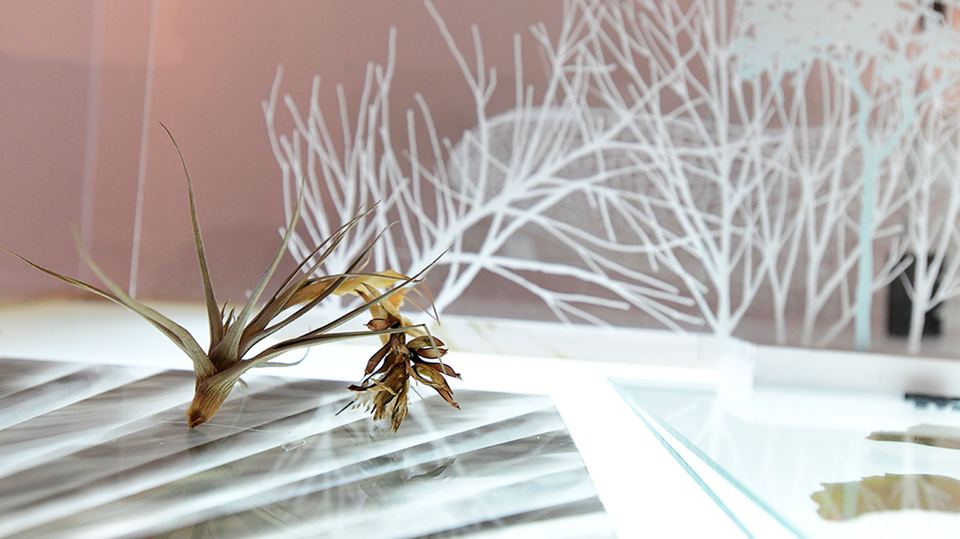
A drift through the landscape and the beauty of plants. It is built around two axes: the botanist’s table, where nature is collected and recorded, and a series of smoke herbaria, imprints of the flora of the surrounding fields.
Pablo La Padula
The artistic work reflects visually on the cultural pertinence of the scientific and artistic operations. Art and science are put in relation to visualize, to register and to model the nature of the other with whom we share our habitat.
 1 / 7
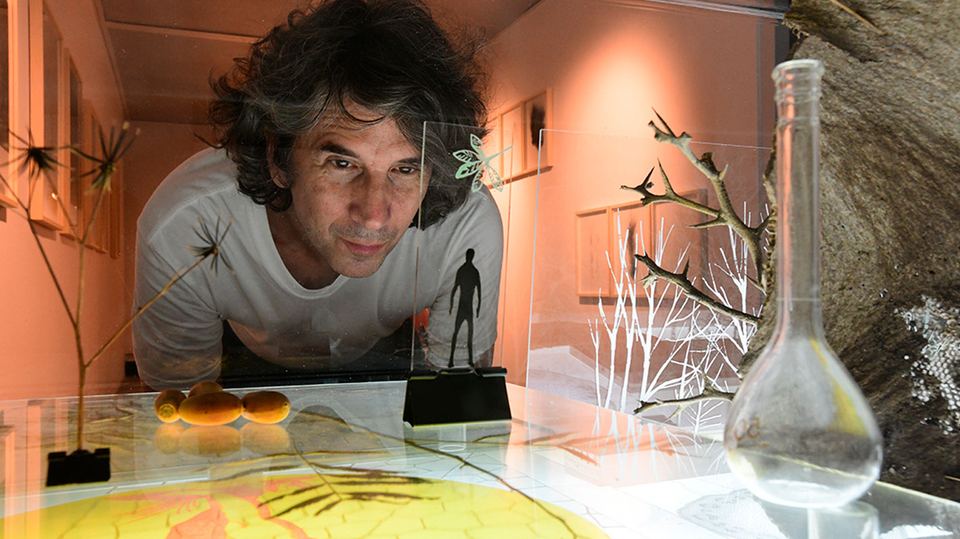
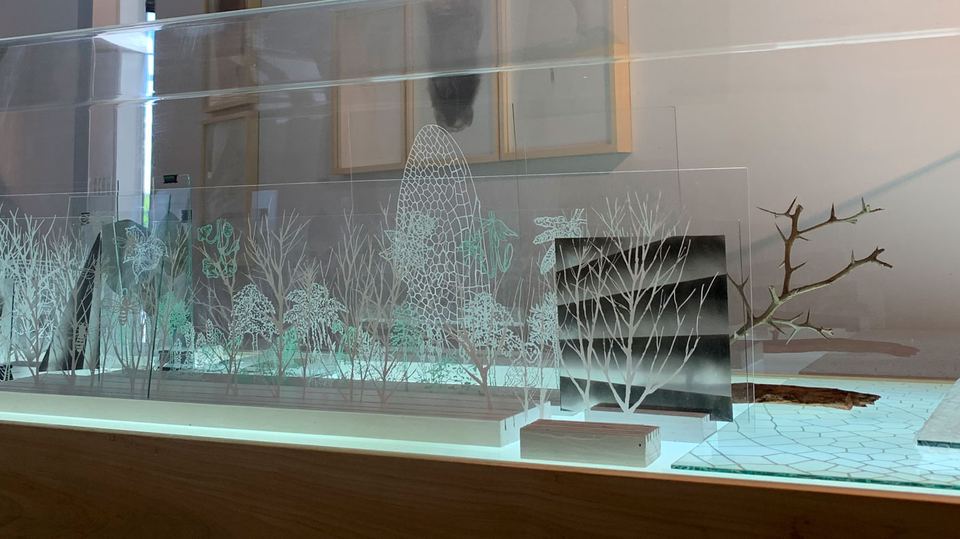
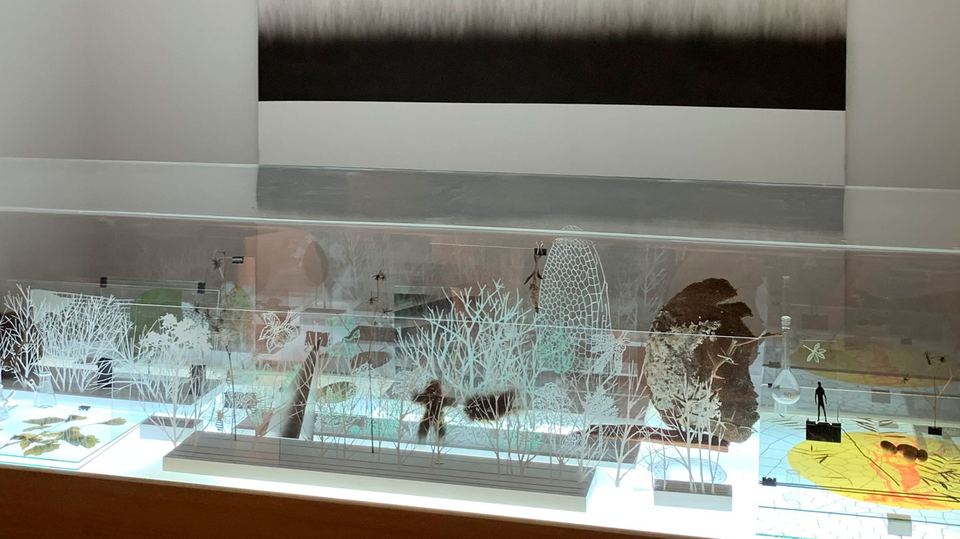
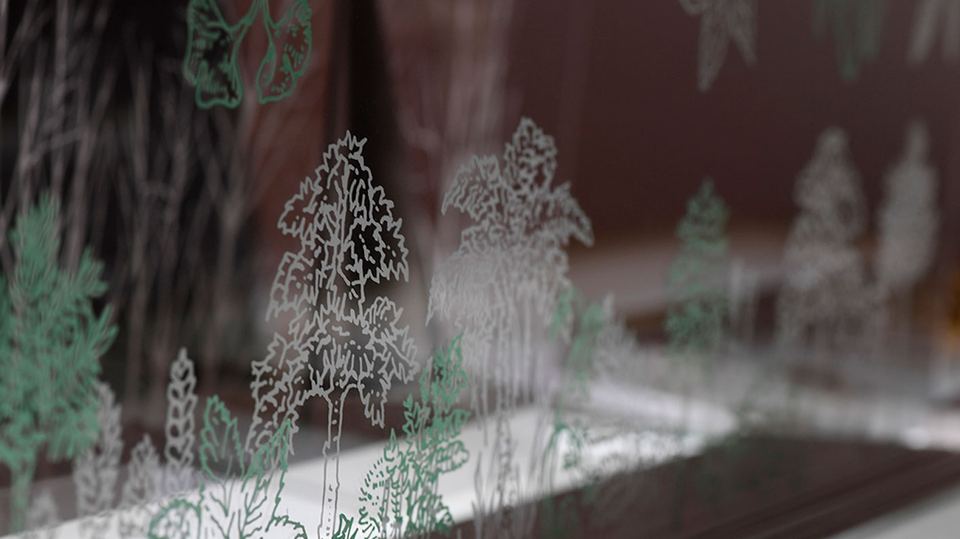
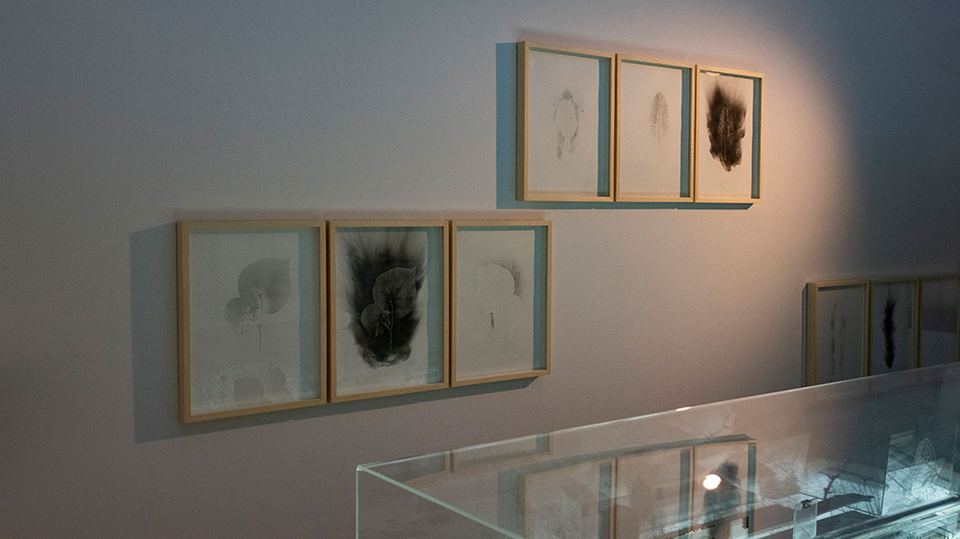
Herboriza Agua MansaPablo La Padula · Smoke herbaria and objects · Installation
A drift through the landscape and the beauty of plants. It is built around two axes: the botanist’s table, where nature is collected and recorded, and a series of smoke herbaria, imprints of the flora of the surrounding fields.
Works at Bellatrix
Free thought at Bellatrix: there are times when the idea of holding a certainty, like a fire stoked too hard, sweeps away and sterilizes the field of thought. Today we know there is no single way of seeing the world, and that perhaps the only true certainty prevailing in these dystopian times is the power of life encrypted in a diversity of forms. In Darwinian terms, we can say that diversity holds the capacity for adaptation and evolution, not only biological but also cultural. Bellatrix stands as a watchtower from which to discern that wealth of ways of living between the vegetal and the cultural. To broaden the horizon of our gaze and perception, to open rather than close, to allow ourselves to doubt before we explain. Pablo La Padula, January 2019.
Herboriza Agua Mansa, or the desire to observe without calculating
Herboriza Agua Mansa (Herborize Still Water) proposes a drift across the landscape, across vegetal beauty: to become a flâneur of the natural-domesticated. To become anti-botanical, to become an explorer of the emotion of the curious encounter with what has just grown, what has just been observed, using as a guide one’s own intuition about the magic that sprouts. A sensory taxonomy of the tactile experience of the present, of the here and now. A snapshot of the time shared between humans, countryside and nature. Between the eternal and the ephemeral, between the known and the unknown, between the real and the magical, between science and fiction. The installation thus becomes a whimsical map of the plant textures and forms of a familiar territory anchored between past and future, like its flora, between the natural and the urbanized.
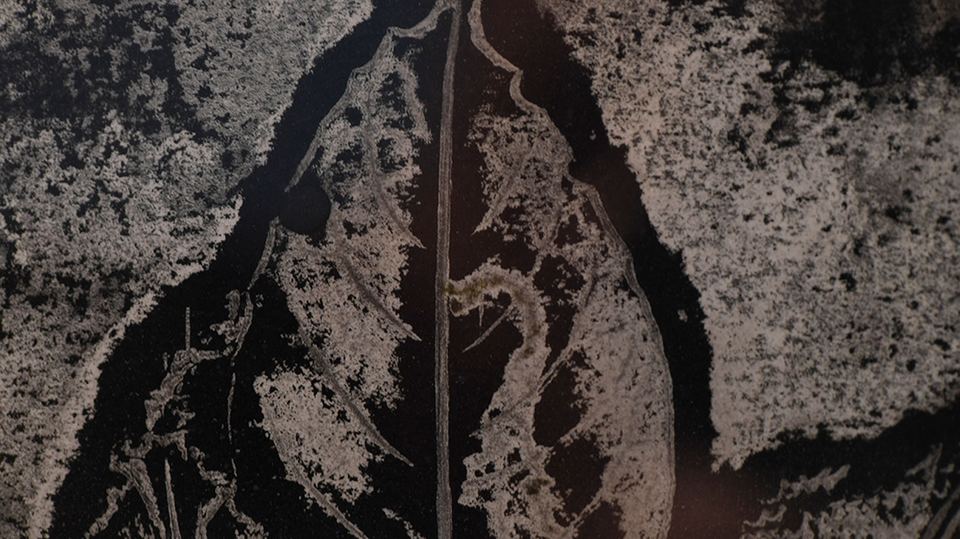
Herboriza Agua Mansa is built on two visual and object-based axes: the botanist’s table, from which he comes and goes to nature to capture, record and understand it, and a series of herbaria on smoke, life casts of the curious flora of the surrounding countryside. A herbarium that declassifies the disciplined gaze and tries, like nature itself, to know no limits, classifications or ties other than its own ethical and moral law of beautiful photosynthetic forms.
Pablo’s reflection during the lockdown
in this time of urgency, art holds a gigantic responsibility: to create new ways of living together, where an intelligent and virtuous dialogue becomes urgent not only within our own community of human beings, but also with non-humans, as the realm of nature in its deepest sense is often called today. Today more than ever, culture is the essential means to think of human beings again as part of nature, and not of nature as a mere resource at the service of the human species.
Life and work
He is interested in creating dialogues. What inspires him has to do with the mystery of nature: going out to the countryside, to the mountains, to lakes and rivers. He does not want to look at the mechanical system; on the contrary, he wants to show drive and emotion. That is the essence of his art.
Pablo has often said that in nature one feels whole, that there is a kind of energy that flows and is always present. His works capture and record, emotionally, that moment.
As a child, the artist enjoyed the family house in Tigre, where he encountered nature directly, outside the urban context. The ephemeral contact between human beings and nature became evident there. His cabinets of curiosities are thus structures where Pablo’s passion for biology and for art can be combined: intuitive collections that follow no scientific logic but awaken emotion and curiosity. Where there are no answers, only questions. Through the work he produces, it is possible to recall and relive the experience of standing before natural processes, as if we were immersed in the forest, the jungle or the mountains.
According to Pablo, the artist does not have to forge a language of his own: “in my case, intelligence lies in using the most suitable technique to resolve the questions; in the end, the object of study gains volume.” In Pablo’s work we see a spiritual, not mechanical, practice: he is a true Renaissance man in the 21st century. In his installation in our space we can appreciate a connection between human beings and nature that moves us emotionally. His smoke paintings reflect an intimate connection between humankind and nature that awakens our curiosity.
In the artist’s own words
“In these installations I manage to bring out the value of all the objects that made me the person I am.”
Critical views on his work
“These sensitive maps make use of different techniques, one of which is the smoke herbarium. These are records of the flora of different spaces on surfaces treated with smoke. Another key anchor is geology: I work with the stones I find and then work them with fire, pigments and smoke, and they become human tools. Then there are the chromatic studies, in which I subjectively analyze the light of these spaces through paintings and drawings. And finally, the cabinets of curiosities, built with all the elements found in these natural spaces that I have been collecting. This system ends up taking the form of an installation, where the installed piece allows the viewer, and me, to look for unsuspected relationships between objects that, scientifically, need not have any rational or mathematical relationship to each other. It is a way of returning to the old biology and Aristotelian natural philosophy, based on formal analogies between the visual surfaces of things. If a plant has leaves shaped like my hair, then something of me takes part in that plant and something of that plant takes part in me, simply because we resemble each other formally in some way, and a relationship of analogy or likeness can be established. If I can take and eat a root such as the mandrake, which has a human shape, it must do something to me, because it has something human and I have something of a plant, so it will bring me some benefit. This is the basis of today’s pharmacology, which starts from a sensual, perceptive approach to objects that will later surely prove to have a formal biochemical, physicochemical and spatial-geometric relationship.”
Source: arte-online.net
Biography
Pablo La Padula, Buenos Aires, 1966. PhD in Biological Sciences from the Faculty of Exact and Natural Sciences, University of Buenos Aires (UBA). He carries out biological research at the Laboratory of Hypoxia and Cellular Respiration of the Instituto Taquini, Faculty of Medicine, UBA-CONICET. He has developed a model of protection against heart attack through simulated high-altitude acclimatization (controlled exposure to low oxygen pressure) without the use of drugs or medication. His scientific work has been published in international journals such as Nitric Oxide, Brain Research, Hypertension, Journal of Applied Physiology and Journal of Hypertension. He trained in the visual arts with Alberto Goldenstein, Carlos Gorriarena and Eduardo Stupía, and with theorists such as Graciela Speranza and Inés Katzenstein at the Universidad Torcuato Di Tella. A significant body of his work was recently added to the collection of the Museo de Arte Moderno de Buenos Aires, under the direction of Victoria Noorthoorn.